What to Put in an "If I Die" Binder, and What Belongs With a Lawyer
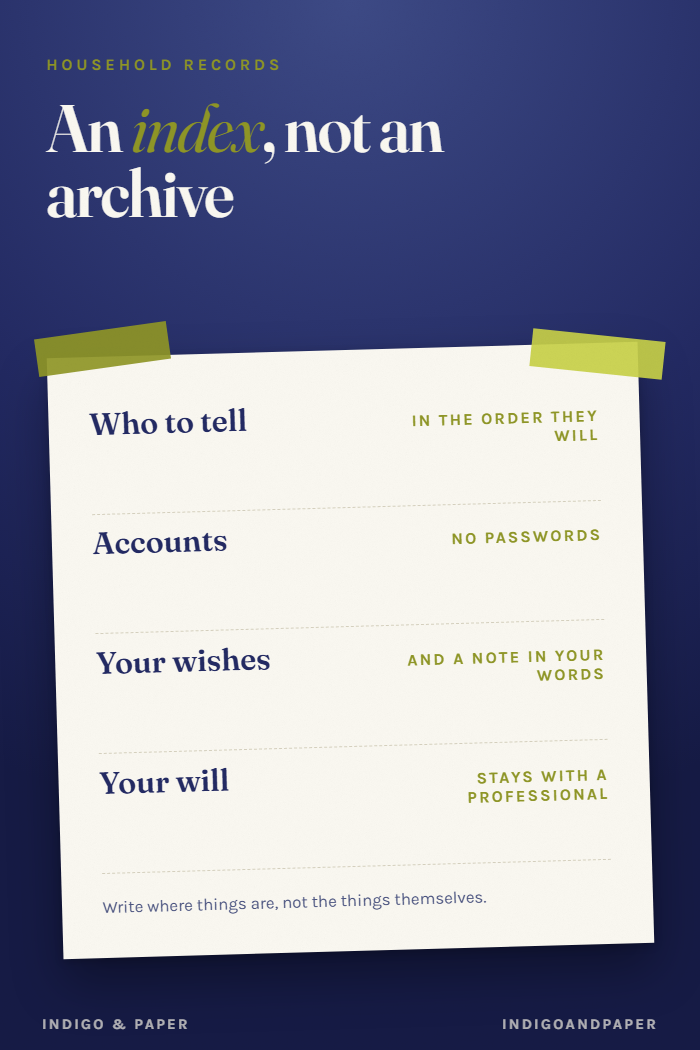
An "if I die" binder is an index, not an archive. Who to tell, where things are, what you would like, and the few things that must go through a professional instead.
An "if I die" binder is written for one afternoon: the one when someone who loves you has to start dealing with everything, and does not know where anything is. It does not need to be long. It needs to answer the questions they will actually have, in the order they will have them.
It is also not a legal document. A binder cannot do what a will, a power of attorney or an estate plan does, and it should never be relied on to. Those go through a qualified professional where you live. The binder sits alongside them and tells people where they are.
An index, not an archive
The most common mistake is trying to put every document inside. A binder full of originals is heavy, goes out of date, and is exactly the thing you would not want lost. Write down where things are instead: which bank, which drawer, which solicitor or lawyer holds the will, where the deeds are kept, who the insurer is.
Who to tell, and in what order
A notification list is the page people are most grateful for. For each person or organisation: who they are, why they need to know, how to reach them, and how urgent it is. Family first, then employer, then the organisations that stop or change things: banks, insurers, pensions, utilities, subscriptions.
Accounts, without the passwords
List the accounts that matter: the service, what it is for, the email or username it uses, and how it is recovered. Leave the passwords out. A binder with passwords in it has to be locked away from the very people who need it, and it is out of date the next time you change one. Many password managers and large online services now offer some form of legacy or trusted-contact access. Set that up with the service itself, and note in the binder that you have.
What you would like
Two things belong here that no institution will ask for.
Practical wishes. Faith or cultural wishes, a location, music or readings, who you would like involved, flowers or donations. These are preferences, not instructions with legal force, and the rules on what is binding vary by country. Writing them down still saves your family from guessing at the worst possible time.
A note in your own words. Anything clarifying or reassuring that only you can say. People keep this page.
Where to keep it, and who knows
Somewhere safe that the right people can reach: tell one or two trusted people it exists and where it is. A binder nobody knows about does nothing.
Review it once a year, on a date you will remember, and write down what changed. An out-of-date binder sends people to closed accounts and old addresses.
What belongs with a professional
Your will. Powers of attorney. Advance care decisions. Guardianship for children. Estate and tax arrangements. The binder should say where each of these is and who holds it. It should not try to replace any of them.
If you want the pages already drawn
A notebook with the headings above is enough, and our guide to a family records binder walks through a worked example for free.
If you want them laid out, The Just-in-Case Family Records Binder is a 63-page A4 PDF built this way. It has a digital account index with a recovery-method column and no password field (page 40), notification lists (pages 44 and 45), memorial and funeral preferences (page 48), a page for a note to your family in your own words (page 49), and an annual review log (page 51), alongside emergency contacts, documents, property, finances and insurance. It is framed around anyone being unavailable, not only death, so it is useful long before it is needed for that. Page 2 says plainly that it is an organisational reference, not legal, financial or medical advice. $12.99.