What Goes on an In-Case-of-Emergency Contact Sheet
Four columns, about eight rows, and the two mistakes that make one useless. Plus a free sheet already ruled for it.
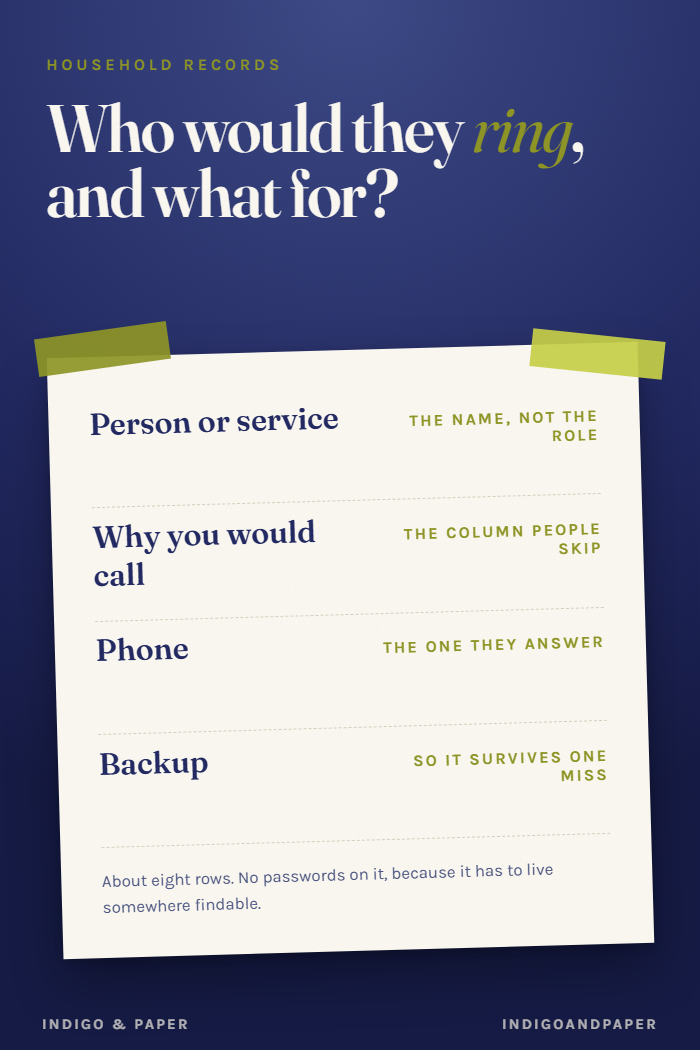
An in-case-of-emergency sheet is one page that answers a single question: who would somebody ring, and what for.
It is not the same document as a family records binder, and conflating the two is why so many of them are never finished. The binder is where everything lives. This is the one page you would stick inside a kitchen cupboard, hand to a babysitter, or leave with the neighbour who has a key.
Four columns, and that is all
Person or service. The name, not the role. "Dr Achampong at Fieldway Surgery", not "doctor".
Why you would call them. The column people leave out, and the one that makes the sheet usable by somebody who does not know your household. "Boiler and anything plumbing." "Has a spare key." "Picks up from school on Wednesdays." Without it, a stranger has eight numbers and no idea which to try.
Phone. The number they will actually answer. A mobile beats a switchboard.
Backup. A second name or number for the same job. This is what stops the sheet failing at the first unanswered call.
Before the detail, the starter this guide produced is free, with two fill-in pages plus one short guide/licence page — three pages in total. It is the shortest version of everything below.
Roughly eight rows, not thirty
The ones that earn a place in most households:
- The other parent, partner or next of kin
- One person outside the household who would come
- The neighbour with a key
- The GP surgery or family doctor
- The vet, if there is an animal
- The school or nursery, with the office line rather than a class teacher
- The landlord, letting agent or, if you own, the emergency plumber
- Work, so somebody can say you are not coming in
Add the specifics your household actually has. Resist adding the ones it does not, because a long sheet is a sheet nobody scans in a hurry.
The two mistakes
Putting passwords or account numbers on it. This page is meant to be somewhere findable, which is exactly why it must not be worth stealing. Keep credentials off it entirely. If a caller needs an account number, the sheet can say where that is kept.
Writing it once and never looking again. Numbers change, people move, the vet retires. Read it through when something in the household changes, which is a better trigger than a date in a diary you will not keep. Put the date you last checked it at the bottom, so the next person can see whether to trust it.
One more, smaller: tell somebody it exists. A sheet in a drawer nobody knows about is the same as no sheet.
A free one, already ruled
You can draw this in five minutes on a sheet of paper, and if you do, you have everything above.
If you would rather have it laid out, the emergency contact sheet is page three of the free Household Handover Starter. It is the same page, ruled for person or service, why you would call, phone and backup. The starter also includes a household-at-a-glance page and a short instruction page, it is three A4 pages, and it costs nothing. You fill it in privately and never send it to us.
When one page is not enough
The sheet handles the phone call. It does not handle the week after, when somebody needs to find the insurance policy, know which bills leave the account and on what date, or work out where the passports are.
That is a different document, and what to put in a family records binder, and what to keep out is the free guide to building one. If you want the long version already drawn, The Just-in-Case Family Records Binder is 63 A4 pages at $12.99, and the emergency contact sheet above is page 7 of it. It asks for locations and references rather than passwords, for the reason in the second mistake above.
It is an organisational reference, not legal, financial or medical advice. Wills, powers of attorney and advance directives belong with a qualified professional.